Wings
a short story

Everything that happened around Nick in those days seemed somehow connected with flying. Flying or wings. It lasted a few years, and got to the point sometimes where Nick would see, by a certain wildness in someone’s eyes, a flying story coming, and think to himself, Can’t we just stand or walk this time? But generally he was as fascinated by the subject as anyone. They were all in their twenties, which is a decade obsessed with uplift. And the one guy whose feet never left the ground was a middle-aged hustler many needed to know and no one wanted to become.
On the ward there was Jari, teetering down the T-shaped corridors between his canes. “Fly or die,” the winged being had told him that night on the Skyway, and when he recounted the story, hunched over his handgrips and peering up at you, Jari seemed, without ever insisting, to be asking you to agree that he’d been double-crossed. In a curious way, his disgruntlement marked the beginning of his recovery, though his legs would never be right.
Sheila had the room across from Nick’s, and she used to appear in the middle of the night standing naked by his bed. She never shook him awake or made a sound. Just waited with her hands straight at her sides for him to open his eyes. Which, given the drugs he was on, must have taken all night sometimes, or never happened at all. If he did wake up, he would see blood smears on her face and body. The smears looked fresh though he couldn’t see blood flowing. And she’d tell, in clipped phrases like telegrams, of another visit by the winged devils who raped her. After a dozen disastrous drug trials, they got her on one which at least turned the tables on her attackers. Now she appeared, still naked and bloody, but it was the devils who were taking the beating. She could rip their wings right off, which made them frantic. Sheila’s face and breasts were scored with deep scratches, and Nick imagined her adversaries flailing with their wing stubs, like umbrella struts stripped of fabric. Now who’s whimpering, Sheila said.
Corinna made a couple of miraculous escapes from the Bubble Room, which was supposed to be escape-proof. Each time, a couple of hours after she’d been locked bellowing behind the plexiglass nipple, she showed up, calmly smoking a cigarette, in the common room. She never said how she’d got out; Nick never heard her talk about anything except baseball and cigarettes. It was a Filipino nurse, who’d been on those nights, who said she had to have “flown through the walls.” The nurse moved down to a medical floor soon after.
Why flown? Nick thought one day some weeks later. Why fly through walls if you can just pass through them walking? And this, like Jari’s sense of unfair dealing, signalled the start of a slow improvement.
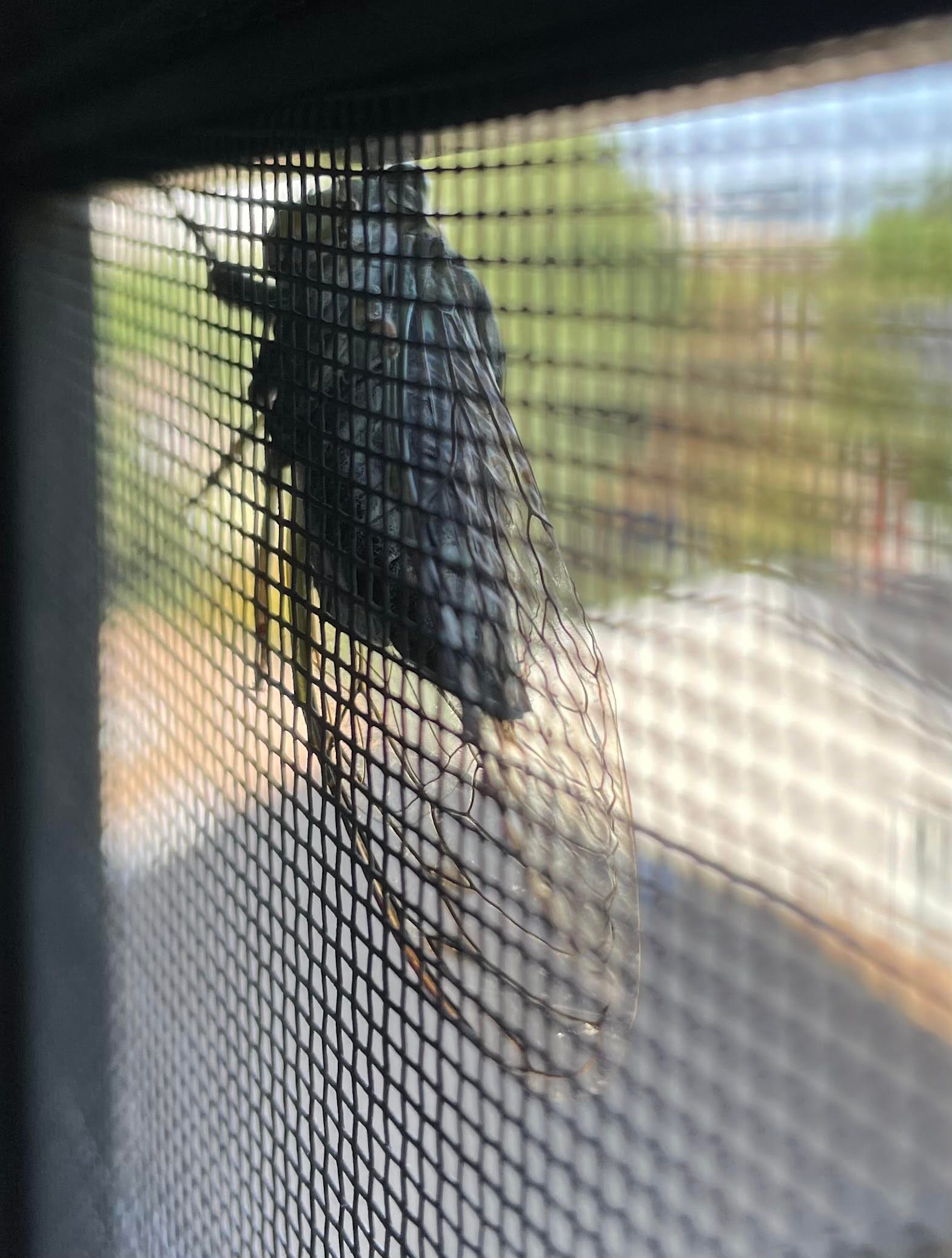
Off the ward, flying was still king. People were reading Carlos Castaneda and other books on shamanism, all of which featured multiple occurrences of flying and levitation, often with specific instructions on how to attain those powers. A friend of Nick’s had a baby and swore he would be home-schooled. If a child was kept free of indoctrination by society, which was run by the Trilateral Commission, it wouldn’t lose any of its natural powers: flying, telepathy, telekinesis…as brainwashed clones, we couldn’t even imagine most of them.
Whatever drug someone had been using the night before, the stone was always described in terms of weightless soaring. I was flying—on pot, angel dust, acid, speed, coke, hash, magic mushrooms, or the awful-tasting peyote buttons that looked like, and may in part have been, dried animal turds. Even on a friend’s Lithium prescription or a dozen beers—I was flying.
The woman Nick moved in with had a recurring dream that intrigued but frightened her. In it, she left her body—she saw it lying there sleeping, with Nick’s body beside it—and floated straight to the window and through it. There, with herself hovering in the air beyond the glass, was where the dream always ended and she woke up. It was partly this dream that moved her to contact Lila, the psychic. And soon she and Nick were hosting psychic evenings at their apartment, their own readings free if they brought in three or more other people.
Nick was sceptical at first. But seated in the bedroom with the door shut, his knees almost touching Lila’s as she spoke in a halting rhythm, in a voice not quite her own—he felt his scepticism waver. Lila said the winged advisor standing right behind him—No, not an Atlantean, but related to that race—was telling her that Nick should quit his job as a dishwasher and devote himself to writing, or—she hesitated to relay this but the advisor was insistent—something terrible would happen to him. Nick felt a chill, and something bulky grazed his shoulder. The fact that of the several hundred poems he had written, just six had been accepted by magazines, one for a five-dollar payment and the rest for contributor’s copies, didn’t seem important at the moment. He was flying. And whatever other gifts she possessed or didn’t possess, Lila made people fly. People floated out of the bedroom glowing with altitude.
One Sunday during a February thaw, puddles slicking the ice and snow, Nick picked his way down to Bold Street where Simon, the middle-aged super for three adjoining walkups owned by a local millionaire, usually had pot for sale and always had good coffee on the stove and cookies or brownies a tenant had baked. He gave some people bargain rents and overcharged others, cutting any side deals he could, especially with broke young girls. The owner didn’t care as long as month-end added up. Simon also wrote poems, and liked to talk poetry with Nick. He thought Nick’s poems were too academic, though a few of them had potential. Simon called his own poems “street raps.” Poems about making a fried egg sandwich after you’d been dumped, or putting your own dog down rather than pay a vet. Artless in rhythm and word choice, filled with misspellings and grammar mistakes, they spilled out of one of the landlord’s legal-size envelopes, printed in all caps on scraps of newspaper or the backs of utility bills. Though Nick had a low opinion of them as poems, they had details—the dog’s bloodshot eye, the egg sputtering in margarine—that stuck in his head. Trying to be straight with himself on certain after-midnight walks, he admitted that they made his own more sophisticated writing seem callow. And callow was the last thing he thought a writer should be.
On this Sunday, Simon had no coffee or chat to offer. Nick found him standing on the doorstep of his building in his housecoat and slippers, flicking with a broom at some shards on top of a snowbank. The housecoat was grey-and-black, like Simon’s receding hair, and his skinny legs below the housecoat were a sunless white. He looked like a giant crow, painted the colours of the overcast, melting day. The shards, some standing upright in the snow, seemed too perfectly flat and clear to be ice. Looking up, Nick saw that the fourth floor window pane was gone. Where the other windows reflected cloud and branches, this one was just dim space.
Someone flying in their sleep? Nick said as he came up the walk.
Simon didn’t turn from his ineffectual sweeping, poking with the broom so he wouldn’t have to leave the cleared step. He could put it that way, if he’s smart, he said.
The tenant, he said, was up in St. Joe’s with a broken leg and collarbone. Anyone less stoned probably would’ve been killed. A cop was waiting outside his room to question him when he woke up.
Soon after this encounter, Nick’s poems began to feature small flows of water, streams and rivulets and trickles, and small frightened animals. Flying was far away from these poems, except when he saw a jet go overhead and wondered if it was carrying some of his poems to a distant editor. He was sending them out in batches of ten, at least five batches a week, to addresses all over the world that he found in The International Directory of Periodicals.
Flying in other forms still kept finding him. At Simon’s, a girl named Muriel turned to Nick while Simon was fixing coffee and told him she could fly. Muriel, who had green eyes and a voluptuous body, must have been flat broke. As soon as she found a boyfriend with a job, she moved out of Simon’s. I can fly, she said to Nick, just as you’d say I can type or I can speak French. She paused to make sure Simon was still rattling mugs and cutlery. I’d never tell him, of course. Of all the flying claims he ever heard, this was the one Nick found hardest to dismiss. Muriel’s beautiful face and plain, unboasting voice would come back to him decades later. I can fly. She wasn’t a reader, didn’t seem at all imaginative or eager to impress, showed no signs of craziness, and was always sober (which she argued about with Simon, who would have preferred her high on something).
Nick bought a bass guitar and began jamming with a group of people on Saturday night. Sometimes a dozen people came out. They bashed out Neil Young and Dylan and CCR: “The Needle and the Damage Done,” “Knockin’ on Heaven’s Door,” “Proud Mary.” Sometimes someone would know a song with more difficult chords and would play it solo while the rest listened impatiently, tapping on their instruments. It was wildly fun, even though all the songs tended to approximate to the same din. There were too many instruments, they never took a few moments to plan an arrangement, and everyone played as if they were still alone in their own apartments.
The drummer was lucky because he had no other drummer pounding at another tempo. He was sleeping with Britney, narrow-eyed and blonde and skinny everywhere except her breasts, which she showed off in low-cut T-shirts. She had a guitar and could chord better than most of them, but after the first night she seldom took it out of its case. Her fingernails were bitten down to ragged stubs and during the sessions she’d sit on a stool beside the drummer, gnawing at them. Britney was married to a man paralyzed from the neck down. She spoke of the stress and exhaustion of living with a quad, of the quantities of care a quad required, of quad disability forms—and the sound of this word in her mouth, quad, was incredibly ugly in Nick’s ears, as if her husband were a rock or a stone. As one half of the rhythm section, he stood near the drummer during songs, but during the long pot-smoking breaks he’d move to the other side of the basement.
One night, though, for some reason, he found himself sitting right next to Britney. Her hand was on his leg and he was refilling her glass and his own from a mickey of Jack Daniel’s. Across the room, Nick’s girlfriend was listening to the only real musician among them, a handsome blind guitarist, sing “Wild Horses.”
Britney was telling him about a quad’s dreams. How they dreamed about walking and running and making love, like anybody. And how Roy—her husband’s name, though she could talk about him a whole night without saying it—paid his dealer to mix up potions that would facilitate long dream-filled sleeps he could escape into. It was tricky, because the mixture had to knock you out but let the dreaming mind play. Proportions of downers and mushrooms worked best so far.
Before he finally stopped talking to me, Britney said—and Nick, topping her up, thought, What took him so long?—he’d tell me of these amazing dreams, so real, and in vivid colour, of hiking and swimming, cycling, even mountain climbing. But then the dreams started to come less often. Or just be fleeting glimpses. Changing the drugs would help for a while, but then would wear off. One of the physios told him this was normal. The mind was catching up to what the body already knew. And in the long run, this was good.
But one day—it was one of the last real conversations we had—he told me that he’d had a dream he just had to tell someone before he forgot. The PSW was late and I was feeding him. In this dream, he said, he was walking again, not just for a moment, but slowly and along a long road. The thing was, though, he was the only walker on the road because everyone else was flying overhead. The sky was nothing but pathways full of zipping bodies, some flapping, some with their arms outstretched like Superman. They clogged the sky. For a moment I thought he was going to cry, but he didn’t. Quads get past that stage. They have to. He told me that as soon as he woke up he knew what the dream meant: that he was in his grave and watching all this on a screen underground. We scheduled an extra session with his therapist that week, and it was the next day that he told me he knew I was seeing Kaz and that although it had been rough to realize at first, he understood now and was okay with it.
For a few moments, nobody said anything. Not Nick or Britney or Vivian, the girlfriend of another jammer who’d been listening nearby. Nick imagined they were all seeing the same thing: Roy underground, watching people flying on a television in his coffin, or not even a coffin.
Then Vivian said, That’s about the lamest excuse for cheating I’ve ever heard.
Britney’s small eyes popped open like she’d been poked. After a second, she laughed. So did Vivian and Nick. Laughed in long, looping cycles, which seemed about to die out and then started up again, like the endings to “Layla” or “Hey Jude.” They were all getting older.